40-Inch vs 48-Inch Rebounder: Which Size Should You Choose?
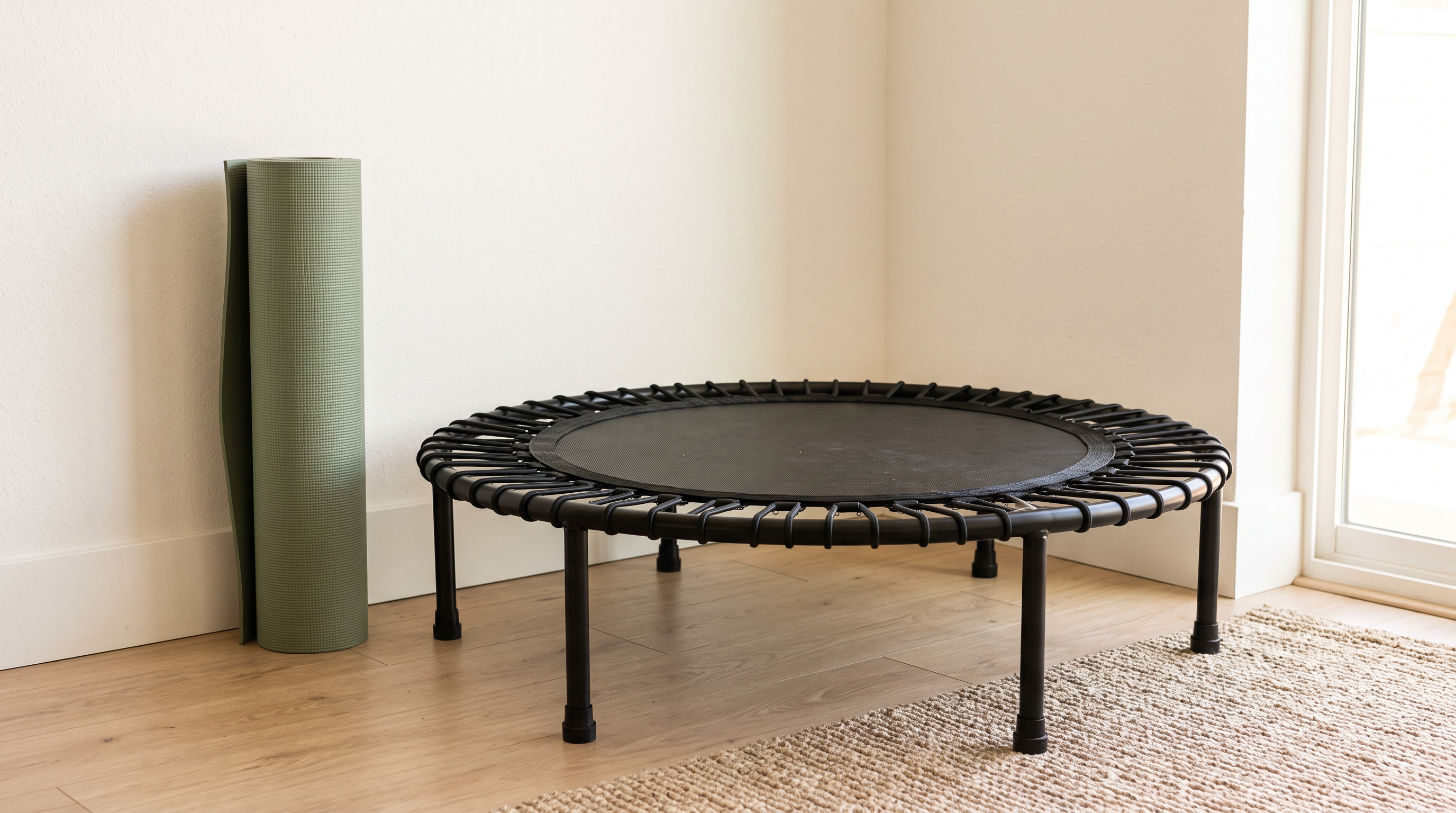
Choosing between a 40-inch and a 48-inch rebounder is not about buying the biggest one you can afford. It is about finding the right fit for your home, your movements, and your confidence.
Choose a 40-inch rebounder when compact size and easy placement matter most. Consider a 48-inch rebounder when extra usable mat space matters more than a smaller footprint. Neither size automatically gives you a better workout.
First, understand what the size actually measures
A listed size such as 40 inches or 48 inches usually refers to the outside diameter of the rebounder's frame—not the part of the mat where your feet land. Always check the manufacturer's measurements.
The springs or bungees occupy space between the frame and the jumping mat. Two rebounders with the same outside diameter can therefore have different usable jumping areas.
Before comparing sizes, look for three separate measurements:
- Outside diameter: how much floor space the frame occupies.
- Usable jumping surface: the area available for your feet and movements.
- Overall setup dimensions: any extra space needed for angled legs or a stability bar.
A 48-inch frame is 8 inches wider than a 40-inch frame. That does not necessarily mean you get 8 extra inches of usable mat.
Why choose a 40-inch rebounder?
You have a smaller workout space
A 40-inch model can be easier to fit into a bedroom, apartment, or multipurpose room. If your rebounder needs to share space with everyday living, a compact footprint can make regular use more practical.
You still need clearance around it. Do not place it tightly against furniture simply because the frame fits.
You enjoy centered, controlled movement
Gentle health bounces, marching, heel presses, and many beginner routines can be done near the center of the mat. You do not need a large rebounder just to start a consistent exercise habit.
The important question is whether that model's usable mat gives you enough room to place your feet comfortably and follow your chosen workouts.
Moving and storing your rebounder matters
A smaller frame may be easier to position or move through your home, but check the product's actual weight and storage design. Smaller does not always mean lighter, and not every model folds.
Look at whether the legs fold, unscrew, or remain fixed. Measure the place where you plan to store it.
Why choose a 48-inch rebounder?
You want more room for your movements
A 48-inch model may provide more usable mat space, depending on its design. That can be helpful for a comfortable wider stance, side steps, or routines with more lateral movement.
You should still stay within the manufacturer's safe jumping area. A larger mat is not a reason to jump toward the edge or beyond your control.
A compact mat feels restrictive
Some people feel more comfortable when they have a little extra room around their feet. If you find yourself constantly adjusting your stance to avoid the edge, a larger usable jumping surface may be worth considering.
That is a comfort and movement-space consideration—not proof that a larger frame is safer or more stable.
You can leave it set up
If you have a dedicated exercise area, a larger rebounder may be easier to accommodate. Keeping equipment accessible can remove the daily task of setting it up and putting it away.
Before ordering, mark out the footprint on your floor with tape. Include the manufacturer's recommended clearance and any stability-bar space.
What size alone will not tell you
Bounce feel: Springs, bungee tension, construction, and the match between your body weight and the model affect the bounce. A 48-inch rebounder is not automatically softer than a 40-inch one.
Weight capacity: Do not assume that a larger frame supports more weight. Check the stated limit for the exact model.
Joint comfort: Diameter alone cannot predict comfort. Start with controlled movement and consider tension, technique, and your individual response.
Balance support: Frame construction, legs, floor conditions, and a compatible stability bar matter. Extra diameter does not replace support you need.
Workout results: A larger rebounder does not automatically burn more calories or produce better fitness results. Your effort, workout duration, and consistency matter more than the frame measurement.
A simple way to decide
A 40-inch model may suit you if:
- Your workout area is limited.
- You prefer gentle, mostly centered movements.
- You need a smaller footprint for everyday placement or storage.
- Its usable mat comfortably accommodates your stance.
A 48-inch model may suit you if:
- You want more usable mat space for your preferred movements.
- Smaller mats feel restrictive.
- Your room comfortably accommodates the larger setup and required clearance.
- Storage is less important because you can leave it set up.
Your height or age alone should not decide the size. Consider your stance, movement style, support needs, and the specifications of the actual rebounder.
Check these details before buying either size
- Measure your room and planned storage area.
- Compare usable mat dimensions—not just frame diameter.
- Check weight capacity, tension options, and stability-bar compatibility.
- Allow enough overhead clearance for your height, the mat height, and your intended movement.
- Review assembly requirements, warranty, and return terms.
If you have concerns about balance, recent injury, or a medical condition that affects exercise, ask a qualified healthcare professional about an appropriate starting approach.
The bottom line
A 40-inch rebounder can be a practical choice for compact spaces and centered workouts. A 48-inch rebounder can be a useful choice when you want more movement room and have the space for it.
Buy the size you can use comfortably and consistently—not the size you think you are supposed to buy. Start with small, controlled movements near the center and build gradually.
Your next step
Need help comparing your options? Take the rebounder quiz to explore equipment choices, or start the free 30-day rebounding plan for a gradual introduction to regular workouts.
Comments (0)
No comments yet. Be the first to share your thoughts!