7 Beginner Rebounding Mistakes (and How to Fix Them)
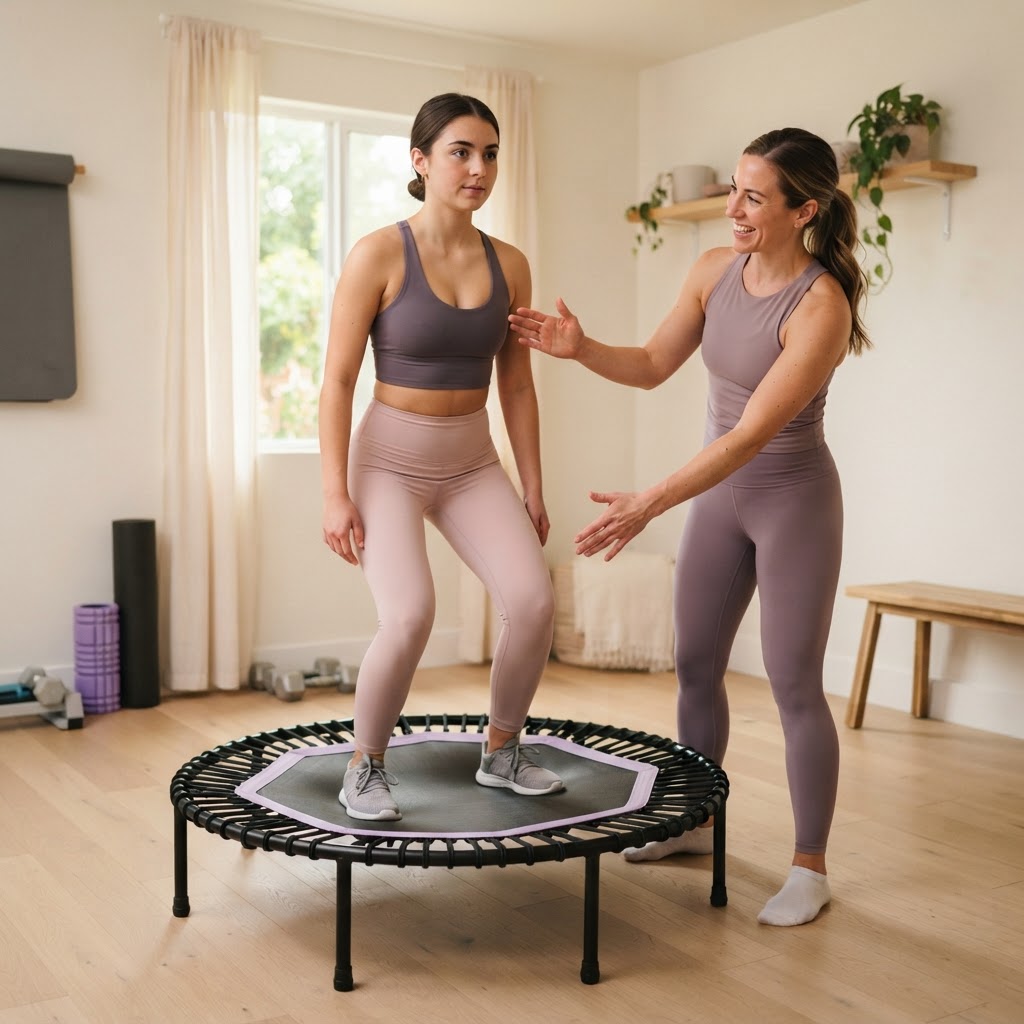
Mistake 1: Trying to jump high
Beginners often copy the biggest movement they see on screen. On a rebounder, control matters more than height. Start by pressing down into the mat with soft knees. A small health bounce teaches alignment and timing.
Fix: Keep your head at nearly the same height and make the mat move beneath you.
Mistake 2: Locking the knees
Rigid knees reduce your ability to absorb and control force. They can also make the movement feel harsh.
Fix: Maintain a small, natural bend. Think “springy,” not “squat.”
Mistake 3: Looking down the entire time
Watching your feet can pull your head and torso forward, which may make balance harder.
Fix: Check foot placement before starting, then focus on a stable point ahead. Use a bar or nearby stable support if needed.
Mistake 4: Starting with a long workout
Enthusiasm is useful. Doing thirty unfamiliar minutes on day one is usually not. Your calves, feet, and stabilizing muscles may need time to adapt.
Fix: Begin with short rounds. Add a few minutes only when the current duration feels controlled and recovery is comfortable.
Mistake 5: Wearing the wrong clothing or footwear
Loose pant legs can catch. Slick socks can reduce traction. Shoes with an unusually wide or rigid sole may feel awkward on a small mat.
Fix: Choose fitted clothing around the ankles. Follow the manufacturer’s guidance for bare feet, grip socks, or supportive athletic shoes, and use the option that gives you reliable control.
Mistake 6: Ignoring the rebounder setup
Uneven legs, loose hardware, damaged cords, overhead obstacles, and a slippery floor are not minor details.
Fix: Inspect the equipment, follow its assembly instructions, provide clear space on every side, and place it on a stable surface.
Mistake 7: Following advanced choreography too soon
Complicated combinations add cognitive and balance demands. Missing the pattern can make you tense and rush.
Fix: Learn one movement at a time. March, health bounce, side-to-side shift, and gentle heel taps are enough for a useful beginner session.
The teacher’s takeaway
Good rebounding looks less dramatic than social media suggests. Build the quiet skills first: posture, pressure into the mat, steady breathing, and the ability to stop under control. Fancy feet can wait. The mat is not keeping score.
Comments (0)
No comments yet. Be the first to share your thoughts!