How to Start Rebounding: Your Free 30-Day Beginner Workout Program
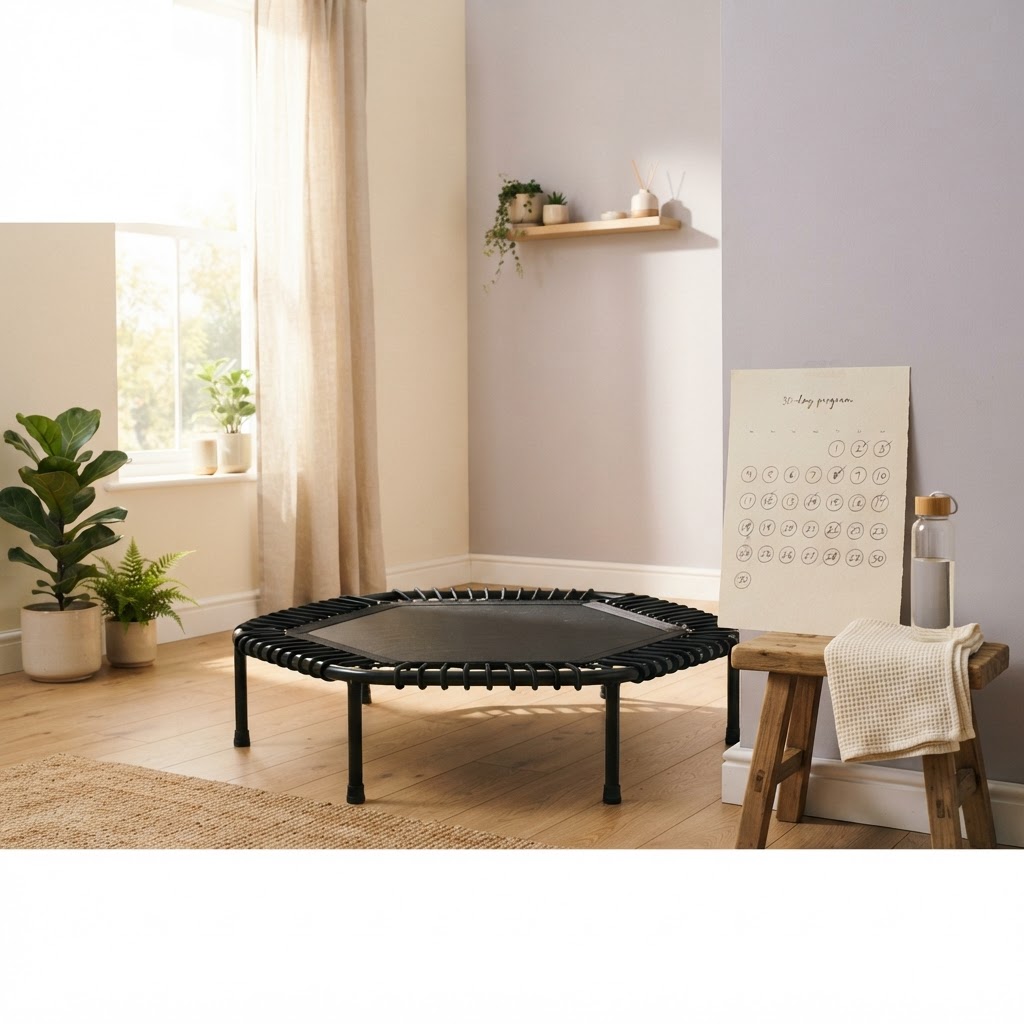
A simple way to begin rebounding
Starting a rebounder workout can feel surprisingly unfamiliar. The mat moves beneath you, balance takes attention, and even a small bounce may challenge muscles you do not usually notice. That is why a gradual plan works better than trying to copy an advanced workout on day one.
Angie’s free 30-Day Beginner Rebounding Program begins with short foundation sessions and slowly introduces cardio, balance, strength, core work, mobility, and recovery. You can follow it in order or choose the session that fits your body that day.
What you need before Day 1
Set your rebounder on a level, non-slip surface with clear space around and above it. Check that the legs, cords or springs, mat, and handlebar are secure. Wear fitted clothing and use the footwear recommended by your rebounder manufacturer.
If balance feels uncertain, use a support bar or stable support nearby. Begin with your feet in contact with the mat. You do not need to jump high to get started.
Week 1: Build your foundation
The first week teaches basic positioning, the health bounce, marching, simple side-to-side movement, balance, and recovery. Most sessions are only a few minutes long. Focus on pressing gently into the mat, keeping your knees soft, looking forward, and stopping under control.
Week 2: Add strength and cardio
As your confidence grows, the plan introduces lower-body strength, low jogging, jumping-jack patterns, and gentle lymphatic-focused movement. Keep the range small enough that your posture remains steady. More movement is not automatically better movement.
Week 3: Practice core, balance, and coordination
Core and pelvic-floor awareness, joint-conscious balance work, mobility, and beginner combinations appear in Week 3. Repeat a familiar session whenever a new movement feels too complex. Repetition is how skill develops.
Week 4: Create a routine you can continue
The final week includes low-impact cardio, total-body sessions, standing and seated gentle options, stretching, and a final foundation check-in. By Day 30, the goal is not perfect choreography. The goal is knowing how to choose an appropriate session and return consistently.
How often should a beginner rebound?
Three or four short sessions per week can be a reasonable starting rhythm for many adults. Your fitness history, balance, health, and recovery all matter. Stop if you experience sharp pain, dizziness, chest discomfort, unusual shortness of breath, or loss of control. Ask a qualified healthcare professional for individual guidance if you are returning after surgery, managing a condition, pregnant, or have been advised to limit impact.
Start your first day
You are never behind. Start with Day 1, repeat days when useful, and take recovery days when your body needs them.
Start Angie’s free 30-Day Beginner Rebounding Program
Keep learning
Comments (0)
No comments yet. Be the first to share your thoughts!