Rebounding Safety: Setup, Footwear, Balance, and Progression
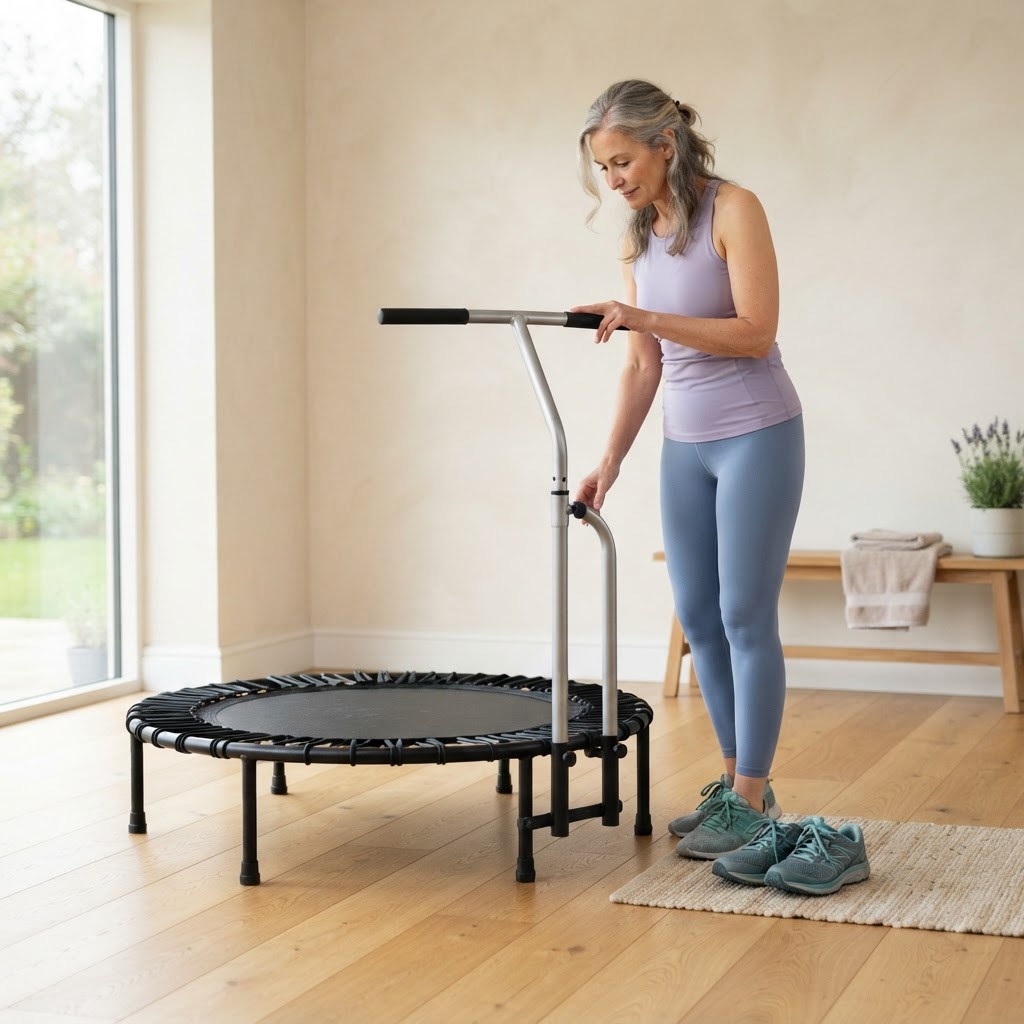
Safety begins before the first bounce
A good workout cannot compensate for unstable equipment or a crowded exercise area. Read the manufacturer’s instructions and check the rebounder before each session.
Confirm that legs are fully attached, cords or springs appear intact, the mat is undamaged, and any handlebar is secure. Keep the frame on a level, non-slip surface. Provide room around the rebounder and overhead. Ceiling fans are excellent appliances and terrible workout partners.
Choose reliable foot contact
There is no single footwear rule for every rebounder or every person. Some manufacturers permit bare feet, grip socks, or athletic shoes. Follow the instructions for your model.
Whichever option you use, your foot should not slide unexpectedly. Avoid ordinary slick socks. If you use shoes, make sure the sole fits comfortably within the jumping area and does not catch the mat edge.
Make balance easier, not heroic
A support bar can be useful while you learn, return after a break, or practice a new movement. Use it for light guidance rather than hanging your body weight from it unless the manufacturer specifically designs it for that purpose.
Start near a wall or stable support if needed, but keep enough clearance that you cannot strike nearby furniture. Look forward instead of constantly watching your feet.
Control the basic position
Stand with feet about hip-width apart, knees soft, and torso tall. Begin by shifting pressure into the mat. Practice stopping on command. If you cannot stop smoothly, reduce the bounce.
Build in this order:
- Stable standing and stepping on and off
- Health bounce with feet in contact
- Small controlled bounce
- Simple direction changes
- Faster cadence or more complex patterns
You do not need to progress every category at once.
Use symptoms as information
Normal exercise effort can include faster breathing, warmth, and muscle fatigue. Sharp pain, dizziness, chest discomfort, unusual shortness of breath, or loss of control are reasons to stop. Seek appropriate professional guidance when symptoms are concerning or persistent.
People who are pregnant, recently had surgery, have significant balance limitations, or have been advised to restrict activity should ask a qualified healthcare professional for individual guidance before starting.
The teacher’s takeaway
Safe rebounding is mostly unglamorous: inspect the equipment, clear the space, use dependable foot contact, begin small, and progress one variable at a time. That routine takes less than a minute and is more useful than pretending confidence can replace preparation.
Comments (0)
No comments yet. Be the first to share your thoughts!