Things to Consider Before Buying a Rebounder: Your Complete Mini Trampoline Buying Guide
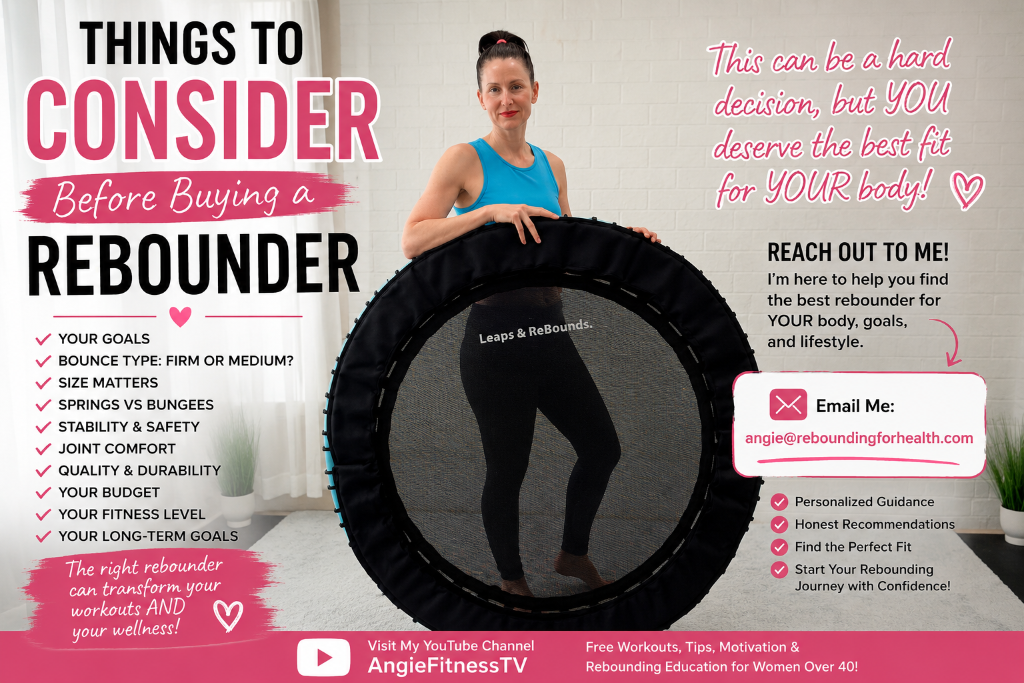
Things to Consider Before Buying a Rebounder: Your Complete Mini Trampoline Buying Guide
Why Choosing the Right Mini Trampoline Can Feel Overwhelming — and Why It Matters
Buying a rebounder is NOT as simple as most people think.
One of the biggest mistakes people make is assuming all mini trampolines are basically the same. They are not. In fact, choosing the wrong rebounder for your body, goals, injuries, fitness level, or budget can completely change your rebounding experience.
Many women buy the cheapest rebounder they can find online… only to end up frustrated, uncomfortable, sore, unstable, or quitting rebounding altogether because the bounce does not feel right for THEIR body.
The truth is: Rebounders are NOT one-size-fits-all.
And honestly? It can feel confusing and overwhelming trying to figure out:
- What size rebounder you need
- Which bounce is best
- Springs vs bungees
- Firm vs medium bounce
- Budget vs premium quality
- Stability bars
- Weight ratings
- Frame quality
- Noise levels
- Joint comfort
- Therapeutic vs athletic bounce
- Beginner vs advanced setups
That is why many women reach out to me personally before buying.
Why the RIGHT Rebounder Matters for Your Fitness Journey
The rebounder you choose can affect:
- Joint comfort
- Knee stress
- Balance confidence
- Workout enjoyment
- Energy levels
- Bounce mechanics
- Muscle engagement
- Stability
- Safety
- Motivation to continue
Some rebounders feel:
- Too hard
- Too unstable
- Too small
- Too stiff
- Too noisy
- Too aggressive on the joints
Others may feel:
- Smooth
- Therapeutic
- Supportive
- Joint-friendly
- Stable
- Comfortable for longer workouts
One Rebounder Can Feel COMPLETELY Different Between People
This is something many people do not understand physiologically.
The SAME rebounder may feel:
- Medium to one person
- Firm to another
- Extremely firm to someone lighter
- Very soft to someone heavier
Why? Because rebounder feel is influenced by:
- Body weight
- Height
- Muscle mass
- Joint condition
- Fitness level
- Injuries
- Balance ability
- Age
- Workout style
- Bungee or spring tension
A 120-pound woman and a 220-pound man can stand on the exact same rebounder and experience completely different bounce mechanics.
Things You Should Consider BEFORE Buying a Rebounder
1. Your Main Goal
Ask yourself:
- Weight loss?
- Lymphatic drainage?
- Athletic cardio?
- Gentle wellness movement?
- Bone health?
- Recovery?
- Balance training?
- Fun workouts?
- Joint-friendly exercise?
Your goal changes what rebounder may work best for you.
2. Bounce Type: Firm vs Medium
This is HUGE.
Firm Bounce
Often preferred for:
- Faster cardio
- Choreographed workouts
- HIIT
- Athletic training
- Strong push-back feel
Medium Bounce
Often preferred for:
- Joint comfort
- Lymphatic-focused rebounding
- Longer workouts
- Therapeutic movement
- Beginners
- Women over 40
- Recovery-focused movement
Neither is "better." It depends on YOUR body and goals.
3. Springs vs Bungees: Which Rebounder System is Best?
Spring Rebounders
- Often firmer
- More direct bounce
- Sometimes noisier
- Usually less expensive
Bungee Rebounders
- Usually quieter
- Often smoother
- Can feel more therapeutic
- Commonly preferred for low-impact rebounding
4. Rebounder Size Matters for Stability and Comfort
Smaller rebounders may feel:
- More restrictive
- Less stable
- More intense
Larger rebounders often provide:
- More movement space
- Better comfort
- More confidence
- Easier balance
Many women over 40 eventually realize they prefer 48-inch or larger rebounders.
5. Cheap Rebounders Are Not Always a Bargain
This is important.
Sometimes buying a very cheap rebounder leads to:
- Poor bounce quality
- Weak frames
- Excessive noise
- Joint discomfort
- Fast wear and tear
- Lack of stability
- Feeling discouraged
Sometimes spending slightly more upfront saves money long-term because the rebounder lasts years and feels dramatically better.
6. Your Current Fitness Level Matters
A rebounder perfect for an advanced athlete may feel terrible for a beginner recovering from:
- Injury
- Surgery
- Fatigue
- Menopause symptoms
- Joint pain
- Balance issues
Your body matters more than marketing claims.
7. Stability Bars Can Be Helpful
Many beginners feel safer using a stability bar while:
- Learning balance
- Building confidence
- Recovering from illness
- Returning to exercise
- Improving coordination
There is ZERO shame in using one.
Why So Many Women Reach Out to Me Before Buying
Choosing a rebounder can honestly feel stressful because there are SO many options online now.
That is why I help women individually based on:
- Height
- Weight
- Goals
- Budget
- Injuries
- Joint concerns
- Experience level
- Workout style
- Desired bounce feel
I have spent years studying rebounders, bounce mechanics, and how different rebounders affect different bodies physiologically.
Need Help Choosing the RIGHT Rebounder?
If you are confused, overwhelmed, or worried about making the wrong choice, feel free to personally reach out to me.
📧 Email: angie@reboundingforhealth.com
I am happy to help guide you toward the rebounder that best fits YOUR body and goals.
Follow AngieFitnessTV for Rebounding Education & Workouts
For free rebounding workouts, mini trampoline education, beginner routines, lymphatic rebounding workouts, and wellness inspiration, visit:
AngieFitnessTV YouTube Channel
Free Workouts, Tips, Motivation & Rebounding Education for Women Over 40!
Comments (0)
No comments yet. Be the first to share your thoughts!