Zone 2 Rebounding After 40: The Low-Impact Cardio Trend Worth Trying?
Affiliate disclosure: This article is educational and links to free Bounce Into Life resources. Some equipment links elsewhere on this site may be affiliate links, which means I may earn a commission at no extra cost to you.
Zone 2 cardio is everywhere right now. Walking pads, heart-rate charts, and “fat-burning zone” promises are filling social feeds. But if walking feels repetitive—or you want an indoor option that is easier to stick with—can a rebounder deliver the same kind of steady aerobic work?
Short answer: it may. A controlled rebounder session can be adjusted to a moderate, conversational effort. But Zone 2 is not a magic setting, and a fast bounce can become vigorous sooner than many people realize.
What I researched for this guide
I looked beyond social-media claims and compared several types of evidence:
- The CDC adult activity guidelines, which recommend at least 150 minutes of moderate-intensity aerobic activity each week.
- The American Heart Association’s practical intensity guidance, including the conversational “talk test.”
- ACE-sponsored mini-trampoline research, which measured heart rate and oxygen use during a 19-minute rebounder workout.
- A mini-trampoline exercise study in women with overweight that reported improved work capacity and VO2max after a structured program.
- A 2025 scientific review of Zone 2 that cautions against calling Zone 2 uniquely or universally optimal.
That mix matters. Rebounding research is promising, but the studies are still much smaller and less extensive than the evidence base for walking, cycling, and other common aerobic exercise.
What does “Zone 2” actually mean?
Zone 2 usually describes a sustainable aerobic effort below the point where breathing becomes hard and conversation breaks down. The exact heart-rate number depends on which zone model a watch or coach uses, so two devices can label the same workout differently.
For most beginners, the talk test is more useful than chasing a perfect number:
- You are breathing faster than at rest.
- You feel warm and know you are exercising.
- You can speak in full sentences.
- Singing would be difficult.
- You could continue for a while without needing frequent recovery breaks.
If you can only say a few words, ease the pace. If the session feels almost effortless, add a small arm movement or a slightly quicker rhythm.
Can rebounding count as moderate cardio?
It can—if the effort lands in your personal moderate range.
In the ACE-sponsored study, a choreographed mini-trampoline workout produced an average heart rate of 79% of measured maximum and average oxygen use of 59% of VO2max. The researchers described the session as being near the border between moderate and vigorous intensity. Participants also rated it as feeling easier than the measurements suggested.
That finding is useful, but it does not mean every rebounder workout is Zone 2. It tells us that rebounding can create a meaningful cardiovascular demand, and that perceived effort may underestimate how hard you are working.
A high bounce, strong arm drive, quick tempo, or weighted moves may push you beyond a conversational pace. For steadier aerobic work, use a lower bounce and simpler movement pattern.
A simple Zone 2-style rebounder session
Try this beginner-friendly structure:
1. Warm up for 5 minutes
Keep both feet in contact with the mat. Shift your weight gently, march slowly, and let your ankles and knees adapt to the surface.
2. Settle into 10–20 minutes of steady work
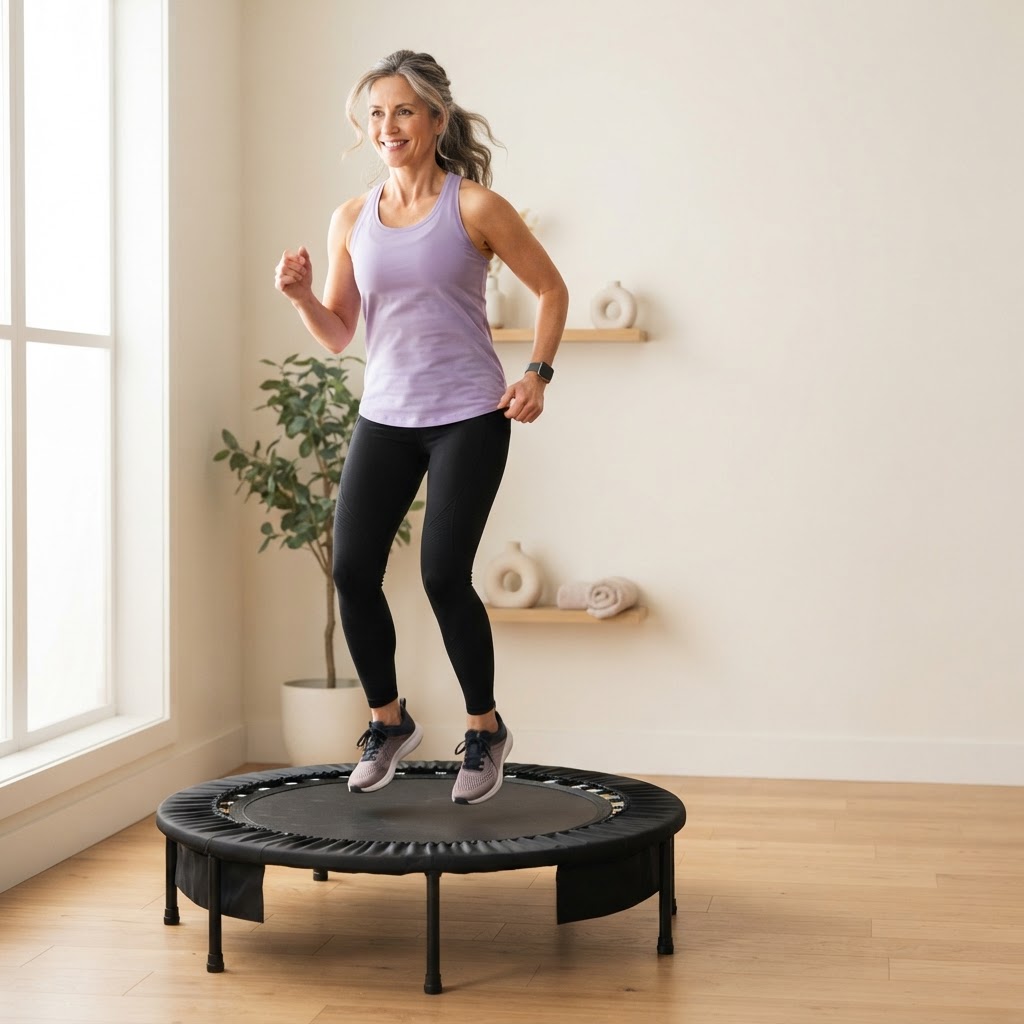
Use a health bounce, easy march, or side-to-side step. Keep the bounce low. Check your breathing every few minutes by saying one complete sentence out loud.
3. Adjust one thing at a time
If the effort is too light, add relaxed arm swings or increase the rhythm slightly. If talking becomes difficult, reduce arm movement, return to marching, or pause.
4. Cool down for 3–5 minutes
Gradually slow your feet and finish with steady breathing before stepping off.
New rebounders do not need to begin with 30 minutes. Ten comfortable minutes performed consistently can be a better starting point than a long session that leaves you overly sore or discouraged.
Why this may appeal after 40
The viral promise of Zone 2 is usually “maximum results with minimum stress.” The evidence does not support treating one zone as a miracle, but the practical idea—building repeatable aerobic work at a manageable effort—can still be valuable.
A rebounder offers several practical advantages:
- It works indoors in a small space.
- The pace can be changed immediately.
- You can keep the movement simple and low.
- Music and varied foot patterns may make steady cardio feel less repetitive.
- A support handle can provide confidence for some users.
The best cardio method is not the one with the most impressive label. It is the one you can perform safely, recover from, and repeat.
Important safety notes
Use a stable rebounder on a level, non-slip surface. Begin near a wall or support handle if balance is a concern. Stop if you feel chest pain, faintness, unusual shortness of breath, or sharp pain.
Heart-rate targets may be less reliable if you take medications that affect heart rate. Pelvic-floor symptoms, recent surgery, osteoporosis, significant balance concerns, or other health conditions may require individualized guidance from a qualified healthcare professional.
The honest takeaway
Zone 2 rebounding is not a scientifically proven shortcut, and a watch cannot define the perfect intensity for everyone. What the evidence does support is regular moderate aerobic activity—and research shows that mini-trampoline exercise can create a genuine cardiovascular workout.
Use the talk test. Keep the bounce controlled. Progress gradually. If the rebounder helps you enjoy and repeat your cardio, that consistency is the real win.
Ready to try it?
- Follow AngieFitnessTV on YouTube for guided rebounder workouts.
- Build consistency with the free 30-Day Beginner Rebounding Program.
- Still choosing equipment? Take the free Rebounder Match Quiz.
This article is for general education and is not medical advice.
Comments (0)
No comments yet. Be the first to share your thoughts!